
“So I’ve been reading everything you’re writing about longing for more, being created for more, wanting to make more of a difference. If I told you I don’t long for more, don’t want to become more, and don’t particularly care about influencing anyone … would you just tell me I’m a narcissist?”
Sometimes the people who insist they don’t want more are the very ones who have forgotten what MORE feels like.
Although my client was demanding an answer, and his demeanor could certainly have been interpreted as narcissistic, I had to smile. Mostly to keep myself from laughing.
But I waited. Something told me he wasn’t finished.
“I mean, I’m tired. I don’t long for anything. All I want is a simple life. I don’t even know what I was created for … and I don’t think I could influence anybody any better than they could influence themselves.”
I felt as though he’d just handed me the keys to his internal kingdom. But I nodded and waited, knowing there was more.
“I’ve had a pretty good run. Good wife who likes me some of the time. Great kids out on their own. Mortgage almost paid off. No complaints.”
I smiled. “Sounds like a good life!”
Clearly, that wasn’t what he wanted to hear. “So … AM I A NARCISSIST?”
Finally, I laughed. “Sounds like you came for a diagnosis. Would you like to be evaluated for narcissism … or would you rather discover what’s buried beneath your ‘good life’?”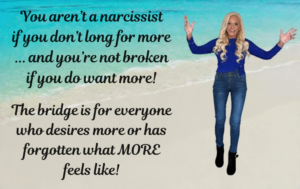
He looked startled. For a moment, I could almost see him deciding whether to challenge me or burst into laughter. Thankfully, he chose laughter.
“What if I don’t like either of those choices?”
“Well, give me another option,” I suggested.
“How about we clear up this narcissism thing first so I can get my wife off my back … THEN you can tell me why you think something’s buried beneath my good life.”
Fair enough!
Narcissism. That word had come up with another client earlier that day.
“Do you know much about narcissism?” she’d asked. I’d laughed and replied, “I had in-service training starting in the womb!”
But beneath the humor is something I take very seriously. Narcissistic Personality Disorder is a legitimate clinical diagnosis. It involves enduring patterns that deserve careful assessment, not casual labeling.
Yet somewhere along the way, popular psychology turned narcissist into a catchall description for anyone who is selfish, emotionally unavailable, difficult, defensive, or simply unpleasant to live with. Certainly, many of us demonstrate narcissistic traits from time to time. But a trait is not a personality disorder.
And behaviors that resemble narcissism can have very different roots. In my clinical experience, I’ve encountered people whose emotional distance, defensiveness, need for control, or lack of empathy appeared narcissistic on the surface … while unresolved trauma, shame, fear, emotional exhaustion, or deeply learned protective patterns were operating underneath.
That doesn’t excuse hurtful behavior. And it doesn’t mean every narcissistic presentation is actually trauma-induced. But it DOES mean I want to understand what I’m looking at before I decide what it means.
Even when a genuine personality disorder is present, I’m interested in the person beneath the patterns … and what meaningful change might require.
So I turned back to my client. “We could explore a formal assessment,” I told him. “But first, I’d rather ask you a few questions that might help us understand what’s happening.”
I could see his curiosity peeking through. “Okay … ???”
“If I called your wife right now, put her on speakerphone, and asked her, ‘What does your husband do that makes you think he’s a narcissist?’ … what would she say?”
I saw the smirk. The rolling eyes. The shifting in his chair. Oh, I’d asked the right question!
I waited.
“Well, how long a list do you want?”
He began counting on his fingers.
“She’d say I wouldn’t know empathy if it bit me in the *ss.”
Another finger.
“She’d say I don’t listen.”
Another.
“That when she compliments me, I say, ‘I KNOW!’”
Another.
“That I’m turning into a grumpy old man.”
And another.
“That I’m charming outside our home … but a completely different man inside it.”
He looked up. “Is that enough?”
“The more important question is … would she stop there?”
“HELL NO!”
We both laughed. Then I asked something more serious. “Would it be fair to say that some of your behaviors do resemble what people call narcissism … but that we haven’t yet discovered what’s driving them from deep within?”
He looked torn between feeling relieved and feeling
trapped. “So … what makes you think there’s something underneath?”
“Years of working with people who have hidden their true selves behind a curtain while presenting a very convincing Wizard of Oz exterior.”
I paused. “And sometimes I wonder whether there’s a little part of them secretly hoping that Toto will come along and pull back the curtain.”
He burst into laughter. “So you’re saying you’re my TOTO?”
“You never can tell!”
But here’s why I’m sharing this story. I’ve received so many texts, messages, and emails from people responding to what I’ve been writing about THE BRIDGE.
Some are curious.
Some are excited.
Some are resisting.
And some are deeply concerned about someone they love who wants absolutely NOTHING to do with it.
Perhaps that’s you. Or perhaps it’s someone you love.
Either way, I want you to understand something: Resisting the bridge doesn’t necessarily mean you don’t need it. Sometimes it means you’ve spent so long protecting yourself that the possibility of something MORE feels threatening.
Let me explain.
1. Burying Unresolved Issues Often Buries Our Wonder and Awe Along with Them
“What the hell is wonder and awe … and who buried WHAT?” He was joking. Mostly. But his question gave us a wonderful place to begin.
I explained that when we grow up in environments where there are secrets to protect, appearances to maintain, or emotions we’re not allowed to express, we learn some very powerful lessons.
Don’t talk about it.
Don’t feel it.
Don’t question it.
Don’t make anyone uncomfortable.
Just keep moving.
And when painful things happen, especially during childhood, we may not have the emotional maturity, language, support, or safety to process them.
So we do what we can.
We compartmentalize.
We disconnect.
We shove things down.
We build a life around what we’ve learned not to feel.
And sometimes, without realizing it, we bury something precious along with the pain.
Our capacity for wonder.
Our sense of awe.
Our curiosity about what’s possible.
Our delight in ordinary moments.
Our willingness to dream.
Think about a small child who sees a butterfly land on a flower. The child doesn’t ask whether watching the butterfly is productive. Doesn’t wonder whether admiring its wings will improve the retirement account. Doesn’t need someone to explain why the moment matters.
The child simply STOPS.
Looks.
Marvels.
Experiences LIFE.
Somewhere along the way, many adults lose that. Not because they’ve become incapable of joy. But because life has taught them to remain vigilant, guarded, responsible, and prepared for the next thing that might go wrong.
And staying guarded takes energy. Sometimes an extraordinary amount of it.
I often become curious about unresolved emotional burdens when someone tells me they’re exhausted far beyond what their circumstances seem to explain.
Not because fatigue automatically means trauma. There are many medical, psychological, and practical reasons people become exhausted. But because maintaining emotional defenses can be draining.
Imagine spending decades holding a beach ball underwater. You may become so accustomed to the pressure that you forget you’re holding anything at all. But your arms are still tired. Your muscles are still working. And eventually, you may decide that exhaustion is simply what adulthood feels like.
My client had said something revealing: “I’m tired. I don’t long for anything.”
I wondered whether he truly didn’t long for anything … Or whether he’d been holding that beach ball underwater for so long that he no longer had the energy to imagine anything different.
What if you’re not finished with life? What if you’re simply weary from carrying parts of your story that were never meant to remain buried?
And what if some of your wonder and awe is still there … waiting to be rediscovered? That possibility alone is worth getting curious about.
2. Buried Volcanic Material Sends Out Eruption Warnings … Even When We Don’t Recognize Them
“I don’t MEAN to have no empathy,” he finally admitted. “I just don’t.” He looked down. “And I don’t mean to be grouchy, either. It just happens.”
Then he described a pattern I hear far too often. “I feel bad about it, so I go hide in front of the news or sports. Then I try to say something nice to her … and she doesn’t want to hear it.”
There it was. A man who didn’t want to hurt his wife. A wife who was being hurt anyway. And two people growing increasingly lonely inside what he called a pretty good life.
I asked him to imagine a volcano. Long before an eruption, there can be activity beneath the surface. Pressure builds. The ground shifts. Gases escape. Heat increases.
There may be warning signs that something is happening deep inside, even when the mountain looks relatively peaceful from a distance. Our emotional lives can sometimes work in similar ways.
Unresolved hurt doesn’t always announce itself by saying: “Hello! I’m the shame you’ve carried since childhood!” Or: “Good morning! I’m the rejection you never processed!”
Wouldn’t that make my job easier? Instead, distress may emerge through irritability.
Defensiveness.
Emotional withdrawal.
Impatience.
Criticism.
Controlling behavior.
An inability to receive affection.
Or difficulty offering empathy when someone we love desperately needs it.
These behaviors don’t prove that trauma is underneath. But they can be signals worth exploring. And here’s the tragedy.
Sometimes the very behaviors we developed to protect ourselves become the behaviors that wound the people we love.
A person who learned that vulnerability leads to humiliation may avoid emotionally intimate conversations. A person who grew up surrounded by criticism may hear even a gentle request as an accusation. A person who learned that emotions create chaos may retreat into work, television, sports, or silence whenever feelings enter the room.
They may believe they’re keeping the peace. Avoiding an argument. Protecting their spouse from their frustration. Or protecting themselves from another experience of failure.
But the spouse may experience something entirely different.
Rejection.
Disinterest.
Loneliness.
The painful feeling of being married to someone who is physically present but emotionally unreachable. And over time, the withdrawing partner often becomes lonely, too.
He may not know how to move toward connection. She may no longer trust his attempts. So he retreats further. She protests louder. And both begin believing the other is the problem.
My client thought his occasional kind words should repair the damage. But his wife was apparently asking for something much deeper than a nice comment.
She wanted access to HIM. His presence. Not his public charm. Not his occasional compliments. Not his explanation that he’d had a long day. HIM. The person behind the wizard curtain.
I told him something I hoped he’d remember: “You may not intend to keep your wife at a distance. But the distance is still real. And your intentions don’t erase her loneliness.”
He became very quiet. Then he asked: “So what am I supposed to do with that?” Now we were getting somewhere. Because the answer wasn’t to shame him. Or excuse him. Or simply tell him to try harder to be nice.
The answer was to begin exploring what made emotional closeness feel so difficult … and to help him develop new ways of responding. Which brings me to the bridge.
3. Resisting the Bridge May Reveal Inner Turmoil … Even When Life Looks Perfectly Put Together
“I just don’t feel comfortable with all this ‘feel-good’ stuff,” he confessed. “I like hearing about it. But to be honest … it scares me.” There it was.
Perhaps the most honest thing he’d said during our entire conversation.
Not the demand for a diagnosis. Not the list of his wife’s complaints. Not the description of his good life.
This: “It scares me.”
I asked him what frightened him. He thought for a moment. Then shrugged. “I don’t know. Maybe finding out there’s more wrong with me than I thought.”
And suddenly, the bridge resistance made sense. Because for some people, the idea of becoming MORE doesn’t sound exciting. It sounds like an accusation.
You aren’t enough.
You haven’t accomplished enough.
You haven’t healed enough.
You haven’t become who you should have become.
And who wants to sign up for MORE of THAT? Especially when they’re already exhausted. But that’s not what I mean when I talk about the bridge.
The bridge isn’t a declaration that something is wrong with you.
It’s an invitation to discover what might still be possible for you.
There’s a tremendous difference. Longing for more doesn’t mean your marriage is a failure. It doesn’t mean your career wasn’t meaningful. It doesn’t mean your children weren’t raised well, your accomplishments weren’t enough, or your life has been wasted.
And it certainly doesn’t mean you need more possessions, more responsibilities, more recognition, or more things to DO.
Sometimes MORE means laughing again. Feeling connected to the person sitting across the dinner table. Waking up with curiosity instead of dread. Experiencing peace without needing to escape into a screen. Feeling genuine delight when someone compliments you … rather than having to defend yourself with “I KNOW!”
Sometimes MORE means recovering the ability to be moved by something beautiful. To be interested in another person’s world. To feel hopeful about tomorrow. To rediscover parts of yourself you haven’t visited in decades.
And sometimes it means finding the courage to ask: “Is this all there is … or have I simply stopped imagining what else could be?”
Now, I don’t believe everyone must constantly strive for bigger achievements or some extraordinary public purpose.
There is tremendous dignity in a simple, contented life. But contentment and resignation are not the same thing. Peace and emotional shutdown are not the same thing.
Choosing simplicity is very different from abandoning hope because hoping has become too frightening.
That’s what I wanted my client to consider. Was he genuinely content?
Or had he learned to call his emotional exhaustion contentment because the alternative required him to look behind the curtain?
I couldn’t answer that for him. And I wouldn’t try. But I could invite him to become curious. Because the bridge isn’t reserved for people whose lives are falling apart. It’s also for people whose lives look wonderful on paper … but who quietly wonder why something still feels missing.
People who have been strong for so long that they no longer know how to rest. People who have accomplished so much that they’ve forgotten how to simply BE. People who love their families but struggle to let themselves be known. And people who have convinced themselves they don’t need anything more … because wanting something more would require risking disappointment.
You don’t have to be broken to deserve transformation.
You don’t have to be miserable to desire greater fulfillment.
You don’t have to abandon the life you’ve built to discover more LIFE within it.
And you certainly don’t have to earn your place on the bridge. You already deserve one.
*****
You can’t drag someone across the bridge … But you can extend the invitation!
By the end of our conversation, my client wasn’t asking whether he was a narcissist anymore. He was asking different questions.
Questions about what might be underneath his defensiveness. Why emotional connection felt so uncomfortable. And whether the life he described as “good enough” might have room for something he hadn’t allowed himself to want.
I didn’t need to convince him that his life was inadequate.
I didn’t need to diagnose him from a handful of behaviors.
And I certainly didn’t need to drag him onto the bridge.
I simply needed to help him see that the bridge wasn’t his enemy. It might actually lead somewhere he’d want to go.
That’s the thing about transformation.
We can’t force people to want it.
We can’t shame them into it.
We can’t argue them into it.
And we can’t cross the bridge FOR them.
But we CAN help them understand that it isn’t a punishment.
It isn’t proof of failure.
It isn’t an admission that their lives have been meaningless.
It’s an opportunity.
To discover.
To reconnect.
To heal.
To grow.
To experience MORE of the life they’ve already been given. And sometimes, the most loving thing we can do for someone who’s resisting the bridge is to stop pulling on their arm … And simply leave the invitation open.
Because when fear begins to loosen its grip, curiosity often finds its voice.
And curiosity can be the beginning of something extraordinary.
An Invitation to Take a Peek:
If you’ve been reading what I’ve written about the bridge and thinking, “That sounds wonderful for somebody else … but I don’t know if it’s for me,” I have an invitation.
Come take a peek.
I’m hosting a FREE LIVE workshop:
Don’t Die with Your Song Still in You
Tuesday, October 27, 2026 | 7 PM Central
We’ll explore what it means to move beyond merely getting through life …and begin discovering the meaning, fulfillment, and possibilities that may still be waiting for you.
You don’t have to know what your song is.
You don’t have to be ready to make some dramatic change.
You don’t even have to be convinced the bridge is for you.
Just bring your curiosity.
I’ll take you there!
But fair warning … You might discover that what you’ve been calling “good enough” has been quietly waiting to become something wonderful.
And once you get a glimpse of what’s possible … You just might want to take a few steps closer to that bridge.
With Love & “There’s MORE Life Waiting” Hugs!
Dr. Neecie ❤️